Before You Sign: 7 Clauses to Check in Your Nigerian Employment Contract
Whether you are a new graduate or have been working for a while, getting a job offer is always exciting. If it is your dream role…
Debt & Unpaid Money
Have you lent someone money, supplied goods to a customer, or completed a job, and the person you did it for is refusing to pay? If you have tried asking for your money without success, you may be wondering what to do next.
One option available to you is to write a letter of demand.
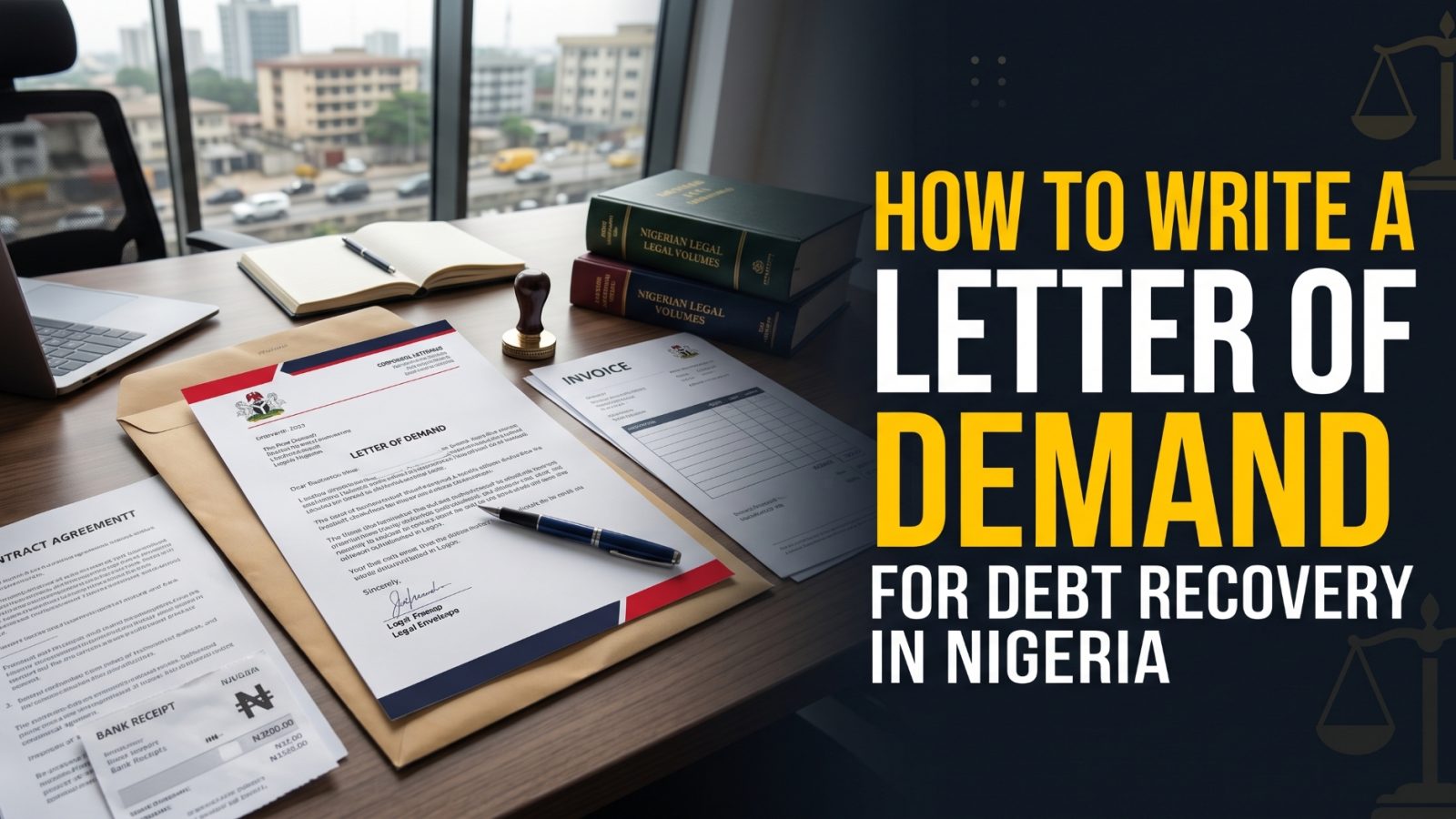
A letter of demand is a formal written request asking someone to pay a debt they owe you. It explains how the debt arose, the amount outstanding, when payment is expected, and what you intend to do if the person fails to pay.
If written well, it can help you get your money without going to court. It also serves as evidence if you later decide to go to court that you asked for your money, but the debtor refused to pay.
So, in this article, I'll explain everything about how to write a letter of demand for debt recovery in Nigeria. It will cover what to include, how to send it, and what you can do if the debtor still refuses to pay.
A letter of demand is a formal letter requesting that a person or business fulfil an obligation, usually by paying the money they owe. Examples of situations where you might write a letter of demand include:
The letter lets the debtor know that you expect them to fulfil their obligation within a specified period. Note that a letter of demand is not a court order. Sending one does not automatically establish that the debt is legally recoverable or guarantee that the debtor will pay. However, it is important when pursuing an unpaid debt.
Whether a letter of demand is strictly required before going to court depends on the applicable court rules, the nature of the claim, and your contract terms.
For instance, under the Lagos State Small Claims Court Practice Directions, serving a 14-day letter of demand is a compulsory pre-action requirement before filing a claim. In standard High Court or Magistrates’ Court civil proceedings across Nigerian states, pre-action protocols often require parties to attempt an out-of-court resolution, but a demand letter is not a statutory requirement for every debt action.
However, issuing one is almost always best practice. It crystallises the cause of action, establishes that the debtor refused payment, and serves as critical documentary evidence in court. If you are handling a substantial sum, a disputed debt, or a claim approaching the six-year statutory limitation period, consulting a legal practitioner before taking action is strongly advised.
A good letter of demand should be clear, specific, and factual. The person receiving it should understand exactly what you are asking them to do, and why. Ensure it includes these details:
Start with your full name and contact details. If you are writing on behalf of a business, use the appropriate business name and address. This identifies the person or organisation demanding payment.
Include the full name of the person or business you are demanding payment from. Ensure you identify the correct debtor. For example, if a company owes you money, address the demand to the company rather than automatically treating its director or owner as personally responsible for the debt. Where necessary, confirm the company's registered name and address.
Explain how the debt arose. For example, you might state that the debtor borrowed money from you on a particular date, received goods under an invoice, or agreed to pay for services you provided.
Where applicable, refer to the relevant loan agreement, contract, invoice or other document. Avoid vague statements such as "You have been owing me for a long time." Give enough information for the debtor to identify the transaction.
State the exact amount you are demanding. If the original debt was partly repaid, deduct the payments received and state the remaining balance.
For example:
If you are claiming interest or other charges, explain how they were calculated and identify the contractual or legal basis for claiming them.
Do not add arbitrary penalties or charges simply because the debtor has delayed payment.
State the date on which the debtor was expected to pay. For a loan, this might be the agreed repayment date. For an unpaid invoice, it might be the payment deadline stated on the invoice or in the contract.
If the parties did not agree on a specific repayment date, you may need to examine the position more closely. Explain the relevant facts accurately rather than inventing a deadline that was never agreed upon.
Tell the debtor when you expect payment. You might give them 7 or 14 days, depending on the circumstances and any applicable requirements. However, there is no single deadline that automatically applies to every debt recovery demand throughout Nigeria.
Where a specific court procedure or contract requires a particular notice period, follow that requirement. It is better to state an exact date or a clearly calculated period than to write "pay as soon as possible."
Explain the next step you may take if the debtor fails to pay by the deadline. For example, you may state that you will consider commencing appropriate legal proceedings to recover the outstanding debt.
Keep this statement professional and accurate. Do not threaten arrest, imprisonment or other consequences that have no proper legal basis.
Sign the letter and include your name and contact details.
You may also refer to or attach copies of documents that support your demand, such as:
Ensure you keep the original documents safe.
Below is a sample letter of demand:
[Your Full Name]
[Your Address]
[Your Phone Number]
[Your Email Address]
[Date]
[Debtor's Full Name]
[Debtor's Address]
Dear [Debtor's Name],
I write concerning the outstanding sum of ₦[amount] ( [amount in words] naira), which you owe me.
On [date], I [lent you the sum of ₦[amount] / supplied goods to you under Invoice No. [number] / provided services to you under our agreement dated [date].
Under our agreement, payment was due on [due date]. However, despite previous requests for payment, the outstanding amount remains unpaid.
As of the date of this letter, the amount outstanding is ₦[amount]. This figure reflects [brief explanation of any repayments or adjustments, where applicable].
I therefore formally demand that you pay the outstanding sum of ₦[amount] within [number] days of receiving this letter, or by [specific date].
Payment may be made to the following account:
Account Name: [Account Name]
Bank: [Bank Name]
Account Number: [Account Number]
If you have already made payment, please provide evidence of the payment so that the records can be checked and updated.
If you fail to pay the outstanding amount within the stated period, I will consider taking appropriate legal action to recover the debt, subject to the applicable law and court procedures.
If you dispute the amount claimed or believe that there is a reason payment should not be made, please communicate your position in writing within the stated period.
I hope this matter can be resolved without the need for court proceedings.
Yours sincerely,
[Your Signature]
[Your Full Name]
Attachments, where applicable: Copies of the loan agreement, invoice, payment records or other relevant documents.
Important: Adapt the letter to the facts of your case. Do not include an agreement, payment date or other detail that does not accurately reflect what happened. Also, this is a general template and not a substitute for legal advice.
You can deliver a letter of demand by hand, via email, or WhatsApp. You can also send it via courier. Whatever method you choose, ensure you keep a record of the delivery.
The short answer is yes. If the debt is straightforward and uncontested, you can draft and send the letter yourself using the template above. However, consider engaging legal counsel if:
Having a lawyer review your documentation ensures that your demand is legally sound, properly served, and positioned for swift recovery if the matter goes to litigation.
Recovering money from a defaulting debtor can be frustrating, especially after multiple informal reminders. A well-drafted letter of demand provides a structured, formal mechanism to assert your claim, set a firm repayment timeline, and document default.
Keep your demand factual, ensure all payment figures are strictly accurate, and always preserve verifiable proof of delivery—whether via courier dispatch slip, registered post, or electronic read receipt. While a demand letter cannot guarantee repayment on its own, it provides a strong evidentiary foundation for any legal step that follows.
Need assistance with debt recovery?
If you are dealing with an unpaid debt and need professional support reviewing your records or drafting an enforceable letter of demand, contact our team today or complete our consultation form to get started.
This article is general information only and is not legal advice about your particular circumstances. Reading it does not create a lawyer-client relationship. If you need advice on your situation, tell us what's happening.
Whether you are a new graduate or have been working for a while, getting a job offer is always exciting. If it is your dream role…
When your landlord serves you a notice to recover possession at the end of your tenancy, what do you do? Do you pack and leave, fight…
Can a landlord legally increase rent by any amount in Lagos? This is the question most Lagosians are asking, including my neighbour, whose rent just went…
Tell us what's happening. We'll review your request and let you know the fee before any work begins.
Get Legal Help